3D interior rendering: show buyers the home they will actually buy
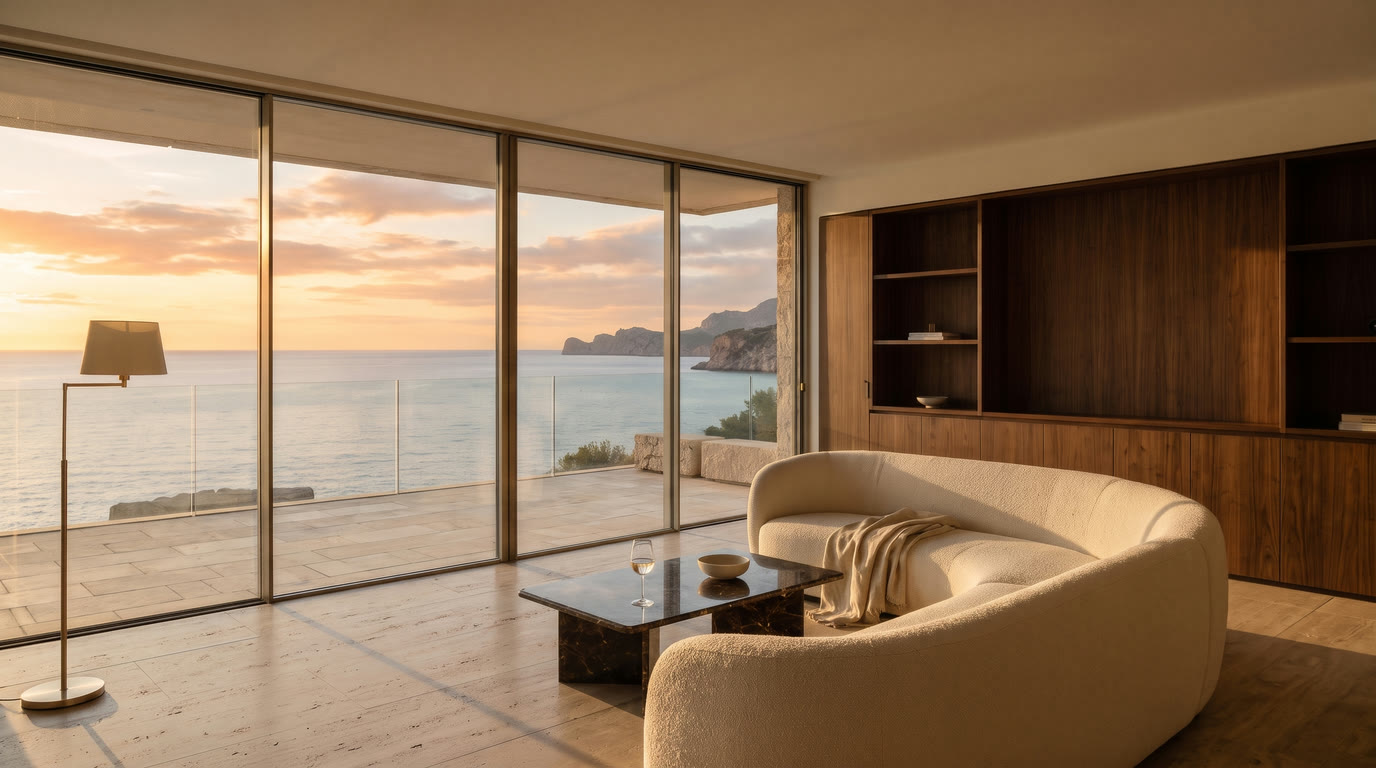
Off-plan buyers can't walk into a home that doesn't exist yet, so 3D interior rendering does the walking for them. The exterior catches their eye, but the interior render is the picture they study when they are deciding whether the home is for them.
Presale Films doesn't make renders. Rendering studios do, and we work alongside them. My part starts once the renders exist, so I spend much of my time inside developers' interior sets, and one pattern keeps coming up. The interiors are briefed to impress. They show the penthouse, through a lens wide enough to make a living room feel like a lobby, finished with upgrades that aren't in the price, in light that room will never get. Each of those choices makes the render look better on the day it arrives, and each one gives the buyer something to hold against the home when they finally get the keys.
My argument is simple. Render the home your buyers will buy, the way they will see it. An interior a buyer believes keeps working for the whole campaign, and it's the kind a film can be built from later.
What is 3D interior rendering?
3D interior rendering is the making of photorealistic images of the inside of a building from its design files, before it is built. A rendering studio models the rooms from the architect's drawings, applies the specified materials and fittings, places the furniture and lights the space for a chosen hour. In an off-plan sale, the interior renders do the job of a show apartment that hasn't been built yet.
Our guide to architectural rendering for developers covers the whole discipline, and 3D rendering for real estate covers briefing a full launch set. This page stays indoors.
Which apartment should you render?
Interior budgets tend to go to the penthouse. I understand why. It has the best view and the biggest terrace, and it makes a beautiful picture. But in an apartment building the typical floors hold most of the homes, and the buyer reserving a two-bedroom halfway up isn't looking at their home when they look at the penthouse.
Render the unit types that carry the building. If two or three layouts make up most of the stock, each deserves its own living room and main bedroom. The penthouse can still have its moment, presented as the penthouse, but it shouldn't stand in for every home below it. Give each unit the view from its own floor, too. A living room halfway up with a view from the roof is a promise the building can't keep.
How should an interior render be framed?
Ask for the camera at the eye height of a standing adult and a lens close to what the eye sees. No other request changes interior renders as much.
A very wide lens is the shortcut most interiors take, because it fits a whole room into one frame. It also stretches the room. The far wall moves back, the sofa shrinks, and an ordinary living room starts to read like a hotel lobby. Buyers rarely know why an image feels off, but they feel it. The ones who don't notice now will notice at handover, when the room turns out to be the size the floor plan always said it was.
Frame one room at a time, from a place a person would stand: the doorway, the kitchen island, the foot of the bed. If you want to show how the home flows, look through an opening into the next room instead of widening the lens to fit both. That depth gives a camera somewhere to travel when the renders become a film.
What should the room contain?
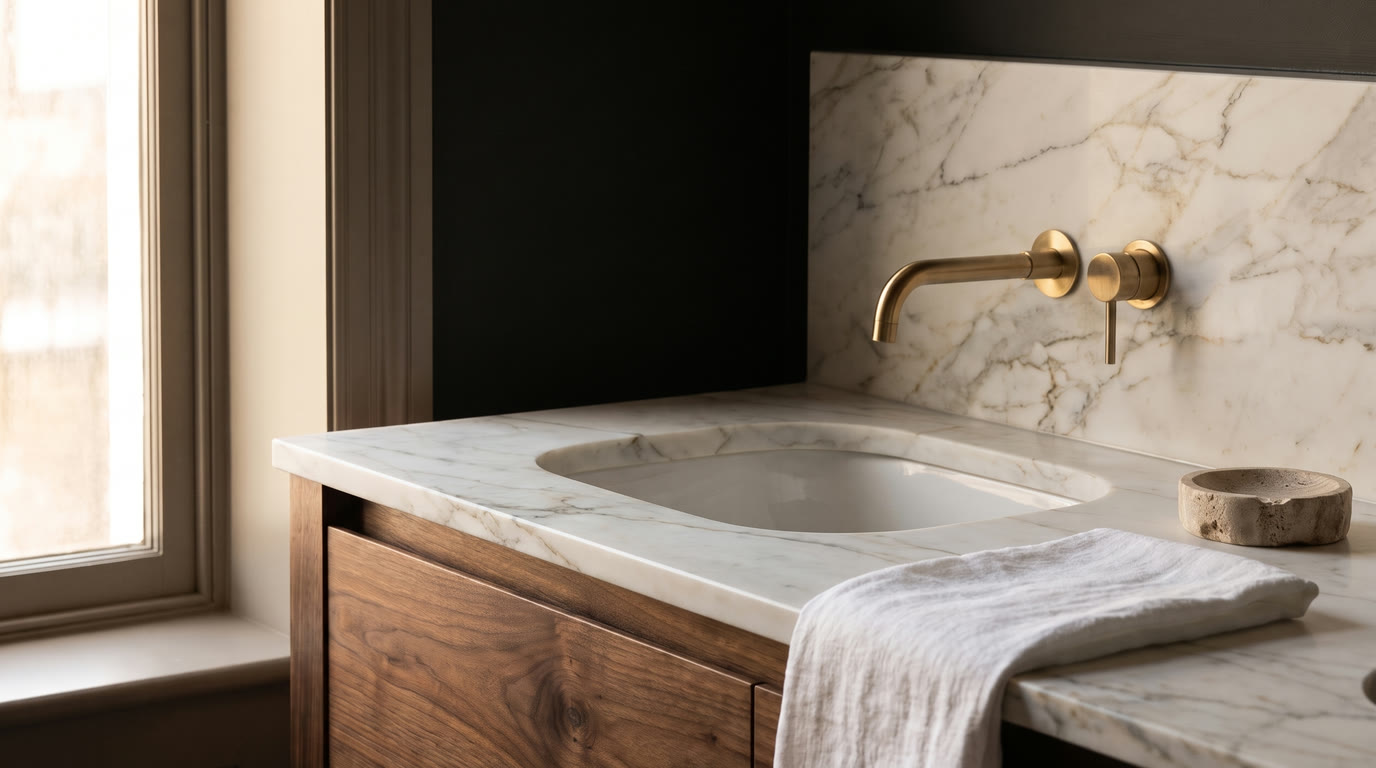
The finishes the buyer is paying for. This is where interior renders drift most often. The marble in the image is a grade above the one in the specification, or the tap comes from the upgrade package.
Keep the render true to the standard finish, and if you want to show an upgrade, say so beside the image. In the UK, the Advertising Standards Authority's advice on advertising new-build and off-plan homes says that an off-plan image showing optional upgrades should carry a note next to it saying so. Wherever you sell, it's good practice, because the interior render is the picture a buyer will hold you to.
Furniture should be at true size and chosen for the person you are selling to, with enough of it that each room has a purpose. An empty room reads smaller and colder than a furnished one, and an over-styled room reads like a catalogue. One sign that somebody lives there, a glass on the table or a throw left on the sofa, does more than a shelf full of props.
What light should an interior render use?
The light should come from somewhere real. Ask the studio to put the sun where the building's orientation puts it. If the living room faces east, its warm hour is the morning, and a sunset in that room is a small fiction a buyer may one day catch. Lamps should be the ones in the lighting plan.
Then give each room one hour and keep it consistent across the home, so the kitchen and the living room of the same apartment look like the same day. It matters again later. When the light has a direction, a filmmaker can move it across the floor.
What happens to interior renders after the launch?
The interior set keeps working long after the brochure is printed, because most of what comes next is made from it. A 3D walkthrough carries a buyer from room to room. Cinematic Stills add new frames of the same rooms, at another hour or with people in them. A film made from the renders gives the home light that moves and a sound of its own, with no shoot and no crew.
One vertical film we made from a developer's interior renders, for a marina residence, lingers on a glass of white wine poured out on the terrace and two people settling in for the evening, then pulls back to show the whole building. A moment like that only works when the room underneath it is believable. If the lens had stretched the terrace or the finishes had been upgraded, the film would have carried the same problem into motion. We add time and atmosphere, and the design stays exactly as it was approved.
Who signs off on the result?
You do, twice. At Vision Alignment, before production, we agree who the buyer is and what the home should feel like. At the Director's Cut Review, before release, you see the finished work, and nothing goes out until it matches your architectural intent. The materials your rendering studio signed off are our brief, so the finish you approved in the render is the finish in the film.
If a launch is coming up, tell us about the project and who it's for. We can look at the renders together once we know what they need to do.
Questions developers ask about 3D interior rendering
What is 3D interior rendering?
3D interior rendering is the creation of photorealistic images of a building's interior from its design files, before it is built. A rendering studio models the rooms, applies the specified materials and fittings, adds furniture and lights the space. In an off-plan sale, the interior renders stand in for the finished home until handover.
Which rooms should a developer render for an off-plan launch?
Start with the unit types that make up most of the building, not only the penthouse. For each one, render the living room with the view from its own floor, the kitchen, the main bedroom and the main bathroom, plus a close detail of the key finishes. Frame each room from standing eye height with a natural lens.
Why do some interior renders make rooms look bigger than they are?
Usually because of a very wide lens. It fits a whole room into one frame but exaggerates depth, so the far wall looks further away and the furniture looks smaller. Asking the studio for a camera at standing eye height and a lens close to what the eye sees keeps the room at its true size.
Should interior renders show upgrades?
Show the standard finish the buyer is paying for. If an image shows optional upgrades, label it beside the image. In the UK, the Advertising Standards Authority's advice on new-build and off-plan homes says an image showing optional upgrades should carry qualifying text next to it.
Can interior renders be turned into a film?
Yes. A filmmaker can direct existing interior renders into a cinematic property film, vertical films or a walkthrough, adding camera movement and changing light, with no shoot. The design stays exactly as approved. Presale Films doesn't make renders; it works from the ones a developer already owns, alongside the rendering studio.
← Back to the blog