3D rendering for real estate: where an off-plan sale starts
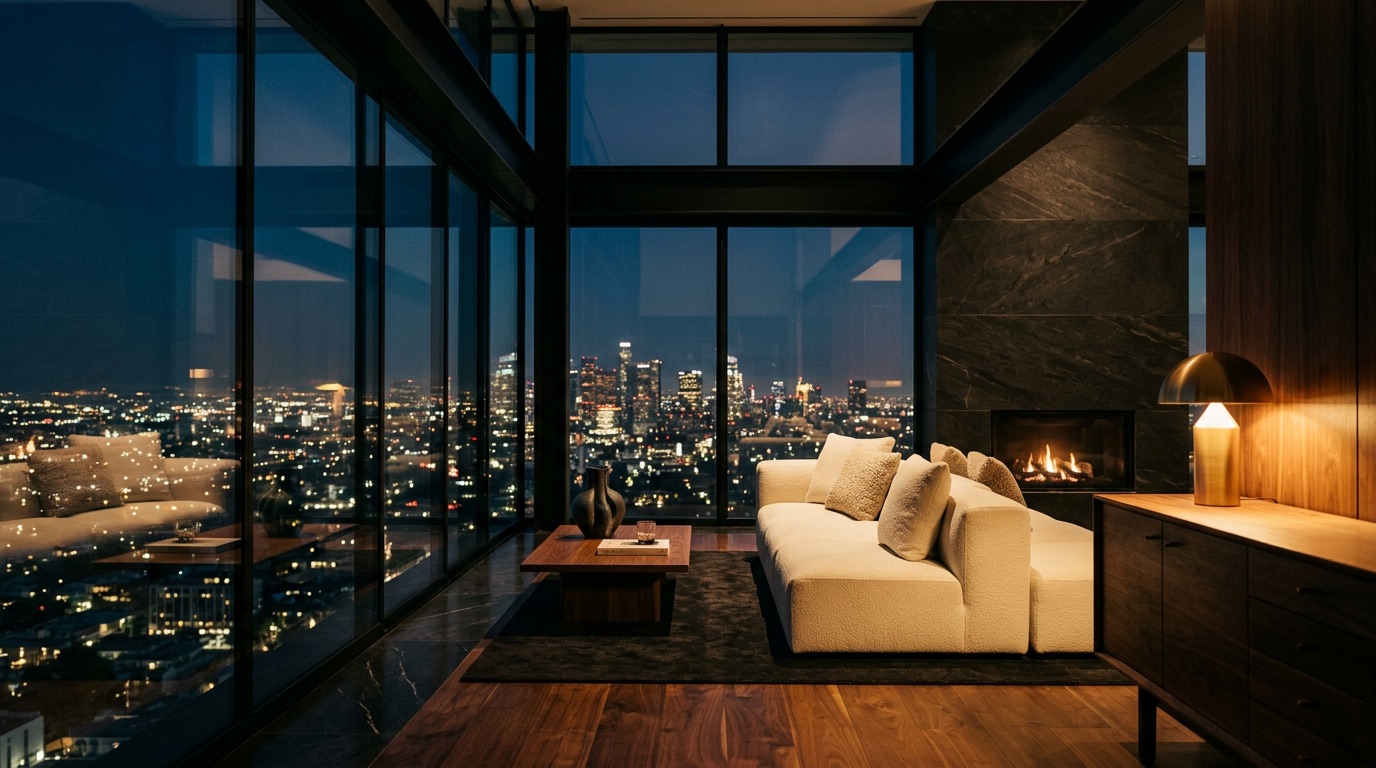
Every off-plan sale starts with a picture. Before a buyer has visited the site or met the sales team, they have looked at a render. 3D rendering for real estate decides whether they keep looking, because until handover the render is the only version of the building anyone can see.
I am a filmmaker, not a rendering artist. Presale Films doesn't make renders, and the studios that do are people we work alongside. I have spent 14 years directing, though, and these days most of my working hours are spent inside developers' render sets. I can see what a strong set makes possible later in a campaign and what a thin one quietly rules out. This is the guide I would give a developer's marketing lead before the brief goes to the studio.
What is 3D rendering for real estate?
It is the making of photorealistic images of a property from its design files before anything is built. A rendering studio builds a 3D model from the architect's drawings, gives every surface a real material, sets the sun and the sky, plants the landscaping and outputs finished images. In most industries a render illustrates a product. In an off-plan sale it stands in for the product until the keys exist.
Our guide to architectural rendering for developers covers the discipline in depth. This page is narrower. It is about the 3D real estate rendering a developer commissions to sell homes, and how to get more out of it once the files arrive.
Why does the render set matter so much in an off-plan sale?
Most render briefs are written as a list of rooms: living room, kitchen, pool, facade. The studio delivers exactly that, and the set looks complete on the day it lands.
The trouble shows up later. The same handful of images has to open the website, fill the portal listings, cover the brochure, hang on the sales gallery wall and travel on brokers' phones. By the middle of the campaign buyers have seen every one of them more than once. The set starts to look tired right when the sales team needs something new to send. Renders are the start of pre-construction marketing, not the whole of it.
So it helps to brief by job rather than by room. For each image, ask where it will be used and what it has to make the buyer feel there. Then ask whether the files will still be useful once stills alone stop being enough.
Which 3D renders does an off-plan launch need?
Commission each view for the work it has to do in the campaign.
- The hero exterior shows the building in its setting at the hour it looks best. It goes on the hoarding, the website and the first slide of every broker deck, so it has to be the strongest image you own.
- A context view shows where the building sits, on a coastline or a city street. International buyers lean on this one. It tells them where they are before it tells them what they are buying.
- The arrival covers the entrance, the drop-off and the lobby. Buyers study it to work out what coming home would feel like.
- Interiors need their view. A living room on its own is furniture. A living room with the water beyond the glass is the reason somebody reserves. After that come the kitchen, the main bedroom and the bathroom, where finishes get judged up close.
- Each amenity the project promises beyond the front door needs its own frame.
- Ask for at least one dusk or night view. Lit windows and a warm facade change how a building reads, and I have rarely seen a set that didn't need one.
Interiors deserve a brief of their own. Our guide to 3D interior rendering covers which units to render, how to frame them and how to keep the finishes true.
How should you brief real estate 3D rendering services?
A studio can only render what the brief asks for. These are the requests I would add, because they decide what the images can become later.
Name the buyer first. A family spending summers by the water wants a different terrace from a professional buying a city base, at a different hour and in a different mood. Tell the studio who you are selling to and the decisions further down get better.
Commit each view to one hour of light. The weakness I see most often is even house light that belongs to no time of day. Ask for morning on the terrace and dusk on the facade, and the images start to feel like a place a person could be.
Render views from real floors. If the sea view is what you are selling, show it from the height a buyer will actually stand at, rather than from a drone position nobody will ever occupy.
Leave some air around each frame. The same image gets cropped wide for the website and tall for a phone, and a view with space around the subject survives both.
Keep the masters. Ask for the highest resolution the studio can deliver, and hold on to the full-quality files plus any animation made along the way. Developers skip this request more than any other, and it matters most for what comes next.
How can developers get more from the same 3D renders?
Most 3D rendering for developers is treated as finished the day the files arrive. I think that wastes it. A good render already implies more than it shows. The sun in the image has a direction, so it can travel. The pool has a surface, so it can move. There is a table on the terrace, so somebody can sit at it.
That is where my work starts. From the renders you already own, with no shoot and no crew, a developer can have a property film, vertical films and a new set of stills.
The film is for the website, the launch event and the screen in the sales gallery. Light moves across the facade, a curtain lifts off the terrace, and the sound of the place carries the rest. Our page on how a 3D render becomes a film goes through the process.
Vertical films are composed for the phone from the start, each one built around a single moment of the project, for the feeds where most buyers first come across a launch. See vertical real estate video made from renders.
Cinematic Stills are new editorial frames made from the renders you have: the terrace at another hour, or the lobby from the height a resident walks in at. They refresh the portals and the brochure once the original set has been seen too often. You can drag between before and after on our page of Cinematic Stills made from existing renders.
The design stays as your architects and your rendering studio signed it off. We add time and atmosphere, and we don't redesign anything. The better the render, the better the film, which is why I count rendering studios as partners in this work. Every film in our portfolio was made this way, and if you watch one you will find the original renders inside the frames.
Interiors rendered with their view are also the raw material for a walkthrough that carries a buyer from room to room. Our guide to the 3D walkthrough for real estate covers when developers use one.
Who decides how it all looks?
You do, at two fixed points. Vision Alignment comes before production. We agree the lifestyle the project is selling, who the buyer is and how the brand should feel. The Director's Cut Review comes before release. You watch the film and give notes, and nothing goes out until every detail matches your architectural intent.
I direct the film, and you hold the steering wheel.
Where to start
If a launch is coming up, start with a conversation about the project and the person you are selling it to. The files can wait until we both know what the film is for.
Questions developers ask
What is 3D rendering for real estate?
3D rendering for real estate is the creation of photorealistic images of a property from its design files before it is built. A rendering studio models the building, applies real materials, sets the light and adds landscaping and furniture. In an off-plan sale, the renders stand in for the finished home in all the marketing until handover.
Which 3D renders does a developer need for an off-plan launch?
Most launches need a hero exterior, a context view, the arrival and lobby, the main interiors shown with their view, the amenities, and at least one dusk or night image. Each render should be commissioned for a specific job, such as the hoarding, the portal listing or the brochure cover. Ask for the highest resolution the studio can deliver and keep the master files.
What should a brief to a real estate rendering studio include?
A good brief names the buyer and the lifestyle the project is selling, fixes each view to one hour of light, and asks for views from the floors buyers will actually live on. It should leave room around each frame so the image can be cropped for a website and for a phone. It should also ask for the full-resolution masters and any animation files.
Can 3D renderings be turned into a film?
Yes. A filmmaker can direct existing architectural renders into a cinematic property film and vertical films by adding camera movement, changing light, atmosphere and sound, with no shoot and no crew. The design stays exactly as it was approved. The same renders can also yield new Cinematic Stills for listings and brochures.
Does Presale Films make 3D renderings?
No. Presale Films is a film studio that works from the renders a developer already owns, alongside the rendering studio rather than in place of it. From those renders it directs property films, vertical films and Cinematic Stills. The developer agrees the direction at Vision Alignment and approves the Director's Cut before anything is released.
← Back to the blog