How developers market a project before it is built
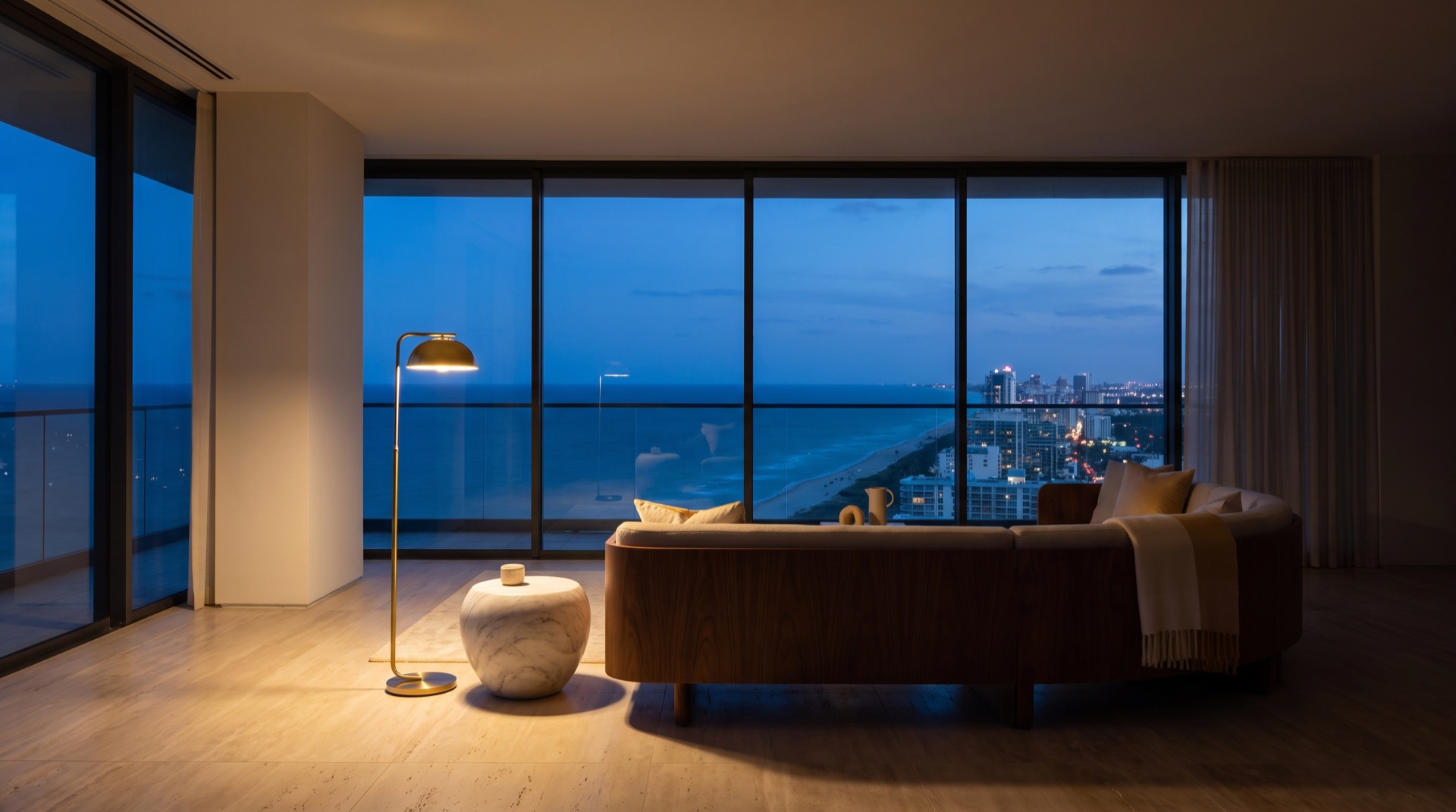
A developer can get a marketing film for a project that does not exist yet by having a filmmaker direct it from the architectural renders the project already owns. Those renders become a cinematic film for the launch, vertical films for social channels, and high-resolution stills for brochures and portals. There is no crew and no shoot, because there is nothing to film yet.
That is what Presale Films does, and it is the whole of what we do. The rest of this page explains how it works and what a developer stays in control of.
Why can't you film a pre-construction project?
You can't film it because the building isn't there. A completed property gets a camera crew, a drone and a sunny afternoon. A presale project has a plot of land, a set of drawings and a sales gallery. Point a camera at the site and you get dirt and hoardings.
So most presale marketing falls back on still renders. They are accurate and often beautiful, and they still leave the buyer looking at a picture. A render shows the terrace. It doesn't show what the terrace feels like at the end of a long day, with the light going amber and the sea somewhere below.
What do you need to make a film of an unbuilt development?
You need the renders you already have. By the time a project goes to market, its rendering studio has resolved the materials, the landscaping, the light and the views. That work is the raw material.
A filmmaker takes those still images and directs them into motion: the camera moves through the space, light changes across a facade, a curtain lifts in the breeze, water catches the sun. Sound design and licensed music do the rest. The geometry and design intent of the approved renders stay as they are. The film adds what a still can only suggest, which is time passing in a place you would want to live.
We cover the craft in more detail on our page about turning architectural renders into film.
What does a developer actually get?
A developer gets one coordinated set of assets cut from the same direction, so the launch looks like one campaign wherever a buyer meets it.
- The cinematic film is the centrepiece for the launch event, the website hero and broker presentations. In 4K it holds up on the largest screen in the sales gallery. See our cinematic real estate video work.
- Vertical films are shorter films composed for the phone, for Instagram, LinkedIn and paid social, where most buyers will first scroll past your project. More on vertical real estate video.
- Cinematic stills are single frames finished to print quality for brochures, portal listings and press.
Because every piece comes from one vision, the brochure and the phone screen tell the same story.
Who decides how the film looks?
The developer does, at two fixed points. Luxury developers are right to worry about handing their brand to a studio and waiting to see what comes back, so the process is built so that never happens.
Vision alignment. Before any editing starts, we sit down with the development team and agree the lifestyle the project is selling, who the buyer is, and how the brand should feel. Is this a place for a family spending summers by the water, or a pied-à-terre for someone who travels for work? The answer changes the pace, the light, the music and the moments we choose to linger on.
Director's cut review. The developer watches the cut, gives notes, and we refine it until every detail matches the architectural intent. Nothing goes out until the developer approves it.
We direct the film, and you hold the steering wheel.
Who directs the film?
A human filmmaker directs every film. Presale Films is led by Leygh Allison, who has spent 14 years directing, and every shot is a decision made by a person who knows why it is there. We use the best tools available, including AI tools, the way any modern studio does. They sit in the toolkit. The director's chair is not theirs.
When in the sales cycle should the film be made?
The best time is before the launch, while the renders are final and the sales story is being set. A film made then can open the launch event, carry the pre-sales campaign and sit on the website from day one. It also keeps working after the launch, in broker kits and in follow-up conversations with buyers who need to show the project to a spouse or a business partner overseas.
International buyers make the strongest case for a film. Someone reserving a unit from another continent may never stand on the site before handover. For them, the film is the closest thing to a visit. Our guide to pre-construction marketing goes further into that.
How is this different from a flythrough or an animation?
A flythrough answers a spatial question: where the tower sits, how the lobby meets the drop-off, how the two-bedroom flows. Sales teams need that clarity, and a good flythrough earns its place.
A cinematic film answers a different question, which is what it would feel like to live there. It works with mood, light, pacing and sound, the same way a hotel brand film does. Many developers use both. The flythrough explains the project, and the film is what makes a buyer want it.
Frequently asked questions
How much does a pre-construction marketing film cost?
Pricing is quoted per project. It depends on the scope of the film, how many vertical films and stills the launch needs, and the number of renders involved. The quickest way to an accurate figure is a short conversation about the project.
Do I need new renders for the film?
No. We start from the renders you already have. If the set is thin in one area, we talk about it at the vision alignment stage and work out what the film needs. Most projects never need anything new.
Can the film be made before construction starts?
Yes. That is the point of it. The film is built entirely from renders, so it can be made at any stage, including before ground is broken.
Who directs the film, a person or AI?
A person. Every Presale Films project is directed by a human filmmaker. AI tools are part of the modern toolkit, and we use them where they serve the film, but the creative decisions are made by the director, and the developer approves the cut.
Do I get approval before anything is released?
Yes. You agree the creative direction at the vision alignment stage and review the director's cut before release. Nothing is published without your sign-off.
Can the same project produce social content as well as a launch film?
Yes. Vertical films for social channels and cinematic stills for print and portals are cut from the same direction as the main film, so the whole launch reads as one campaign.
← Back to the blog