Why Renders Don't Sell Pre-Construction (And What Does)
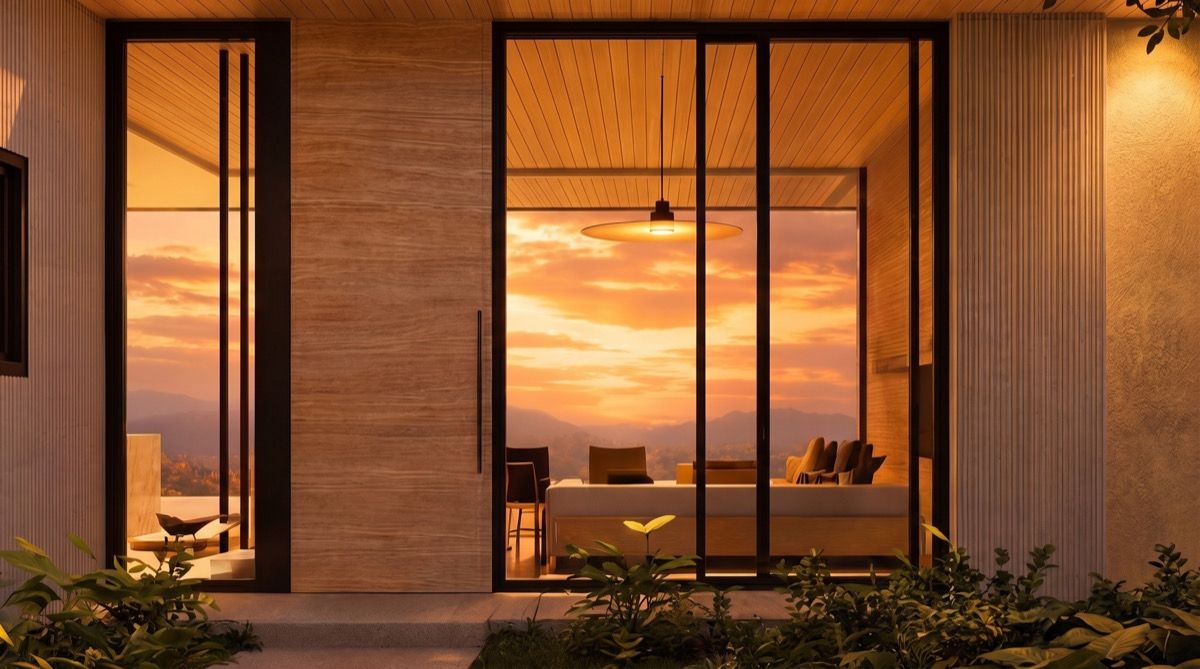 Static render
 Pre-construction marketing has one job that no other kind of real estate marketing faces: selling a home that does not exist yet. The buyer cannot walk the halls, feel the light at six in the evening, or hear the water. All they have is what you put on a screen. And for most projects, what is on the screen is a set of beautiful, static renders. That is where the marketing stops. It is also, unfortunately, where the buyer stops feeling anything.
A render freezes one perfect second
A render is a single frozen moment: lit perfectly, styled perfectly, holding its breath. But a home is not a moment. It is an experience that moves. Light shifts across a wall through the afternoon. A curtain breathes in the sea air. The water in the pool catches the last of the sun and then lets it go. A still image cannot show any of that, and that motion is exactly where the emotion lives. You can render the most beautiful living room in the world, and it will still sit there, silent and airless, asking the buyer to do all of the imagining themselves.
Buyers decide online, and they decide on feeling
Here is the uncomfortable part. By the time a buyer contacts your sales team, they have already formed an opinion, and they formed it on a screen. The overwhelming majority of buyers now begin their search online, according to the National Association of Realtors, long before they ever speak to a person. Your website, your listing, and your social feed are not the top of the funnel. They are the deciding moment.
And people do not fall in love with square meters or a layout diagram. They fall in love with a feeling: the morning light on the terrace, the quiet of coming home, the life they picture living in the space. At the price points pre-construction commands, the decision is emotional first and rational second. If the marketing produces no feeling, there is nothing for the rational mind to justify.
The specific bind pre-construction developers are in
Every developer selling off-plan is caught in the same trap. You are asking for a life-changing sum of money, often a six or seven figure deposit, for something the buyer cannot see, touch, or stand inside. Your competitors down the road have the same style of architectural rendering from the same handful of visualization studios, so the images blur together. Your sales window is finite: the faster you hit your pre-sale threshold, the sooner you secure financing and break ground. And the one asset that could truly set you apart, a finished building to walk buyers through, is the one thing you do not have yet.
Static renders do not solve any of that. They confirm the project is real, and then they leave the buyer exactly where they started: looking, not feeling.
What a still image simply cannot do
Ask a render to do the job of a film and it falls short in predictable ways. It cannot show the time of day changing from a soft morning into a golden dusk. It cannot move the eye through a space the way a slow, deliberate camera can, revealing a room the way you would actually walk into it. It cannot carry sound, and sound (the hush of a space, distant water, a score underneath) is half of what makes a place feel real. The result is a gallery of gorgeous images that a buyer scrolls past without ever feeling like they have been somewhere.
What actually moves a pre-sale: film
A cinematic film adds the four things a render is missing: motion, sound, atmosphere, and time. It turns a picture into a place. Done well, it does not look like an animated render at all. It looks like a real film of a real home, directed frame by frame with intention, so a buyer feels the space before a single wall is poured. That feeling is what shortens the distance between browsing and reserving a unit. It is the difference between showing a buyer what a home will look like and letting them feel what it will be like to live there.
What a presale film actually includes
A finished presale film is not a slideshow with music over it. Built properly, it includes:
- Cinematic motion across the render: push-ins, slow reveals, and multiple angles that move the eye through the space.
- Colour grading that gives the footage a filmic, photographed quality instead of a flat, rendered one.
- Sound design and a licensed score, so the space carries atmosphere and emotion instead of silence.
- A directed edit: pacing, cuts, and rhythm chosen by a human, not a template, so the film builds and lands.
- A hero film of roughly 60 to 90 seconds for your website and sales gallery, plus a set of vertical films built for social and paid ads.
You can see how these come together in our portfolio of property films.
Where these films go to work
A presale film is not a single asset. It is a campaign that works everywhere a buyer meets your project:
- Your website and landing page, as the hero that greets every visitor.
- The sales gallery, playing on the wall so walk-in buyers feel the finished home while standing in an empty showroom.
- Broker and agent decks, giving your sales partners something far more persuasive than a PDF of renders.
- Social and paid ads, where vertical films stop the scroll on Instagram, TikTok, and Reels.
- Investor and launch presentations, where a cinematic film signals a serious, well-capitalised project.
One production, deployed across every one of those touch points, is what a modern render-to-film workflow is built to deliver. If you are the agent marketing the project rather than the developer building it, the same logic applies to your listings: here is why a cinematic real estate video wins listings and sells new-construction faster.
A note on branded residences
If your project is a branded residence, the stakes are even higher. A buyer paying for a brand expects marketing that matches it, and a static render gallery rarely clears that bar. This is exactly where a cinematic film earns its keep: it makes the promise of the brand feel real long before the keys exist.
You already own the raw material
Here is the part most developers miss. You do not need a film crew, a finished building, or a site visit to make any of this. The renders you have already paid for are the raw material. Our render-to-film process takes those existing renders, professional photographs, or footage of a completed build and brings them to life, on a timeline that fits a live pre-sale campaign rather than delaying it.
The bottom line
Renders show a buyer what a home will look like. Film makes them feel what it will be like to live there. In pre-construction marketing, where nothing can be touched or toured, feeling the home is what moves the sale. The developers closing the most units before they break ground are not the ones with better renders. They are the ones showing films.
Questions developers ask
What is pre-construction marketing?
It is the marketing a developer runs to sell homes before they are built, usually off-plan, to reach a pre-sale threshold. Buyers cannot tour anything yet, so every decision is made from what they see on a screen: renders, floor plans, a website and, increasingly, film.
Why are renders not enough on their own?
A render shows one still moment. It cannot show light changing through the day, move the eye through a room, or carry sound, and those are what make a place feel real. Renders prove the project exists; they rarely make a buyer feel at home in it.
Can we make a film before anything is built?
Yes. A presale film is made from the architectural renders, plans and any animation the project already has. Nobody films on site, and nothing needs to be built first.
Where does a presale film get used?
On the website and launch page as the hero, on the wall of the sales gallery, in broker and agent decks, in investor presentations, and as vertical films for social and paid ads. One production feeds all of them, so the campaign looks like one world.
Who decides how the film looks and feels?
The developer, twice. At Vision Alignment we agree who the buyer is and how the film should feel. At the Director's Cut Review you see the finished film and we refine it with you. Your approved renders stay the visual reference throughout, and nothing is released until you are happy with it.
See your project as a film
We turn the renders you already have into cinematic property films, built to make buyers feel the space before it is built.
Inquire