Architectural rendering: a developer's guide to renders that sell
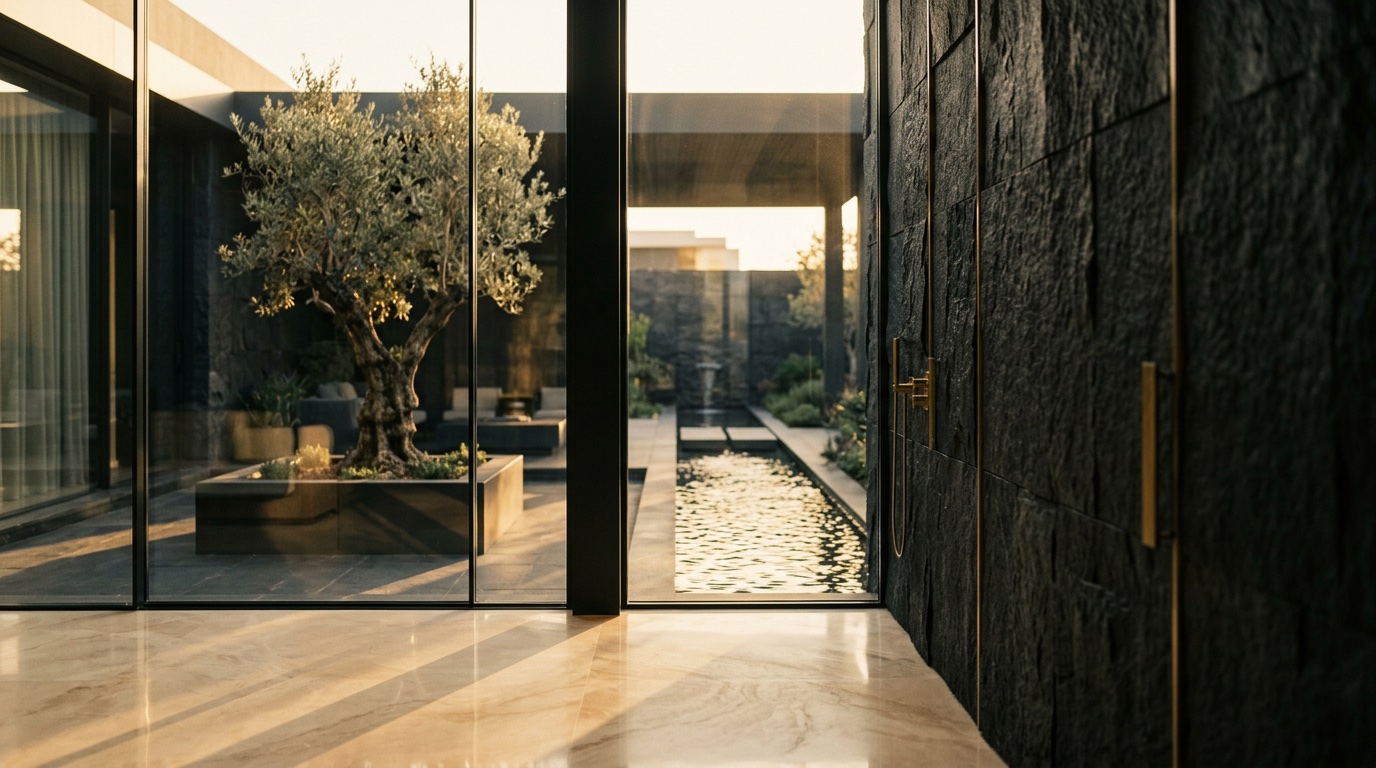
Every development that sells before it is built sells on its architectural renderings. They are usually the first thing a buyer sees and often the last thing a buyer checks before signing.
This page is for developers and marketing teams who already have renders, or are about to commission them. It explains what a render set needs to do for a sales launch, and where the same images can go once stills run out. One thing up front: Presale Films is a film studio, not a rendering studio. We don't make renders and we don't replace the studios that do. We work from their finished images.
What is architectural rendering?
Architectural rendering is the process of creating photorealistic images of a building from its design files before it exists. A rendering artist takes the architect's drawings, builds a 3D model, assigns real materials to every surface, sets the sun and the sky, adds landscaping and furniture, and outputs finished images. The result is a picture of a place that nobody has stood in yet.
You will also hear it called architectural visualization, archviz, or 3D architectural visualization. The terms overlap. Rendering tends to mean the images themselves. Visualization is the wider discipline, which also covers architectural animation, virtual tours and interactive models. For a developer the practical question is the same either way: which images, of which spaces, at what quality.
What a good render set includes
A single hero image can launch a website. A sales campaign needs a set. When developers brief architectural rendering services or architectural visualization services for a residential project, these are the views that tend to earn their keep:
- The hero exterior. The building in its setting, at the hour it looks best. This image goes on everything.
- Arrival. The entrance, the drop-off, the lobby. Buyers want to know what coming home feels like.
- Amenities. Pool, rooftop, gym, garden, whatever the project promises beyond the front door.
- A living space with its view. For most buyers the view is the product, so the render has to show the room and what lies outside it.
- Kitchen, primary bedroom and bathroom. Where finishes get judged up close.
- Dusk or night. Lit windows and a warm facade change how a building reads.
Resolution matters more than people expect. The same files will be printed on hoardings, cropped for portals, laid out in brochures and, sometimes, directed into film. Ask your studio for the highest resolution they can deliver and keep the working files, not only the compressed exports.
Consistency matters too. If interiors and exteriors came from different studios, check that the light and the palette agree. Buyers notice even when they can't say why.
How renders are used in pre-construction sales
In pre-construction, the render is not an illustration of the product. Until handover, it stands in for the product. That is why 3D rendering for real estate carries more weight than rendering for almost any other industry.
The same images do several jobs across a launch. They lead the website and the portal listings, fill the brochure and the sales gallery walls, and travel on brokers' phones to clients. They go into investor decks and to the planning authority. And they end up in social campaigns, where they compete with everything else a buyer scrolls past that day.
Real estate rendering holds up well in most of those places. A strong render tells a buyer what the building looks like and what it is made of.
For the wider picture of how renders fit into a launch plan, see our guide to pre-construction marketing. If your buyers say off-plan rather than pre-construction, our page on off-plan property video covers the same ground in that market's language.
Where still renders stop working
A still render is built to be studied, and serious buyers do study it.
The trouble is the moment before they are serious. On a phone, in a feed, a still gets a glance. It cannot show how the light moves across a terrace through the afternoon, or what it is like to walk from the lift into the apartment and see the water for the first time. It can't carry sound or pace. It asks the buyer to imagine the feeling, and not every buyer will do that work for you.
Architectural animation goes part of the way. A flythrough moves a camera through the model and makes the layout clear: how the tower sits on its plot, how the rooms connect. That is useful, and the studios that make flythroughs do careful work. But a flythrough explains. It is not directed to make someone want to live there. That is a different job, and it calls for a different kind of piece. For buyers who need to understand one home from the inside, a video walkthrough made from the same renders follows the route a resident would take.
From architectural rendering to film
This is the work Presale Films does. We take the renders a developer already owns and direct them into a cinematic film, without a shoot. The render set you commissioned becomes the raw material, the way a location is raw material for a director.
A well-made render already implies more than it shows. The sun in the image has a direction, so it can travel. The pool has a surface, so it can move. The terrace has a table, so someone can sit at it. We direct those implied moments into shots, then add the sound of the place, so the buyer gets the afternoon rather than a single frame of it.
Fidelity is the discipline. The approved renders are the film's single visual reference, so geometry, finishes, palette and landscaping stay as your architects and your rendering studio signed them off. We add motion, atmosphere, people and sound. We do not redesign or quietly improve the architecture. Put a frame of the film beside the render it came from and it reads as the same building. The full process is on our render to film page.
You keep the steering wheel through two named reviews. Vision Alignment comes before production: we agree on the lifestyle the property offers, the buyer you need to reach and the brand, so the film is aimed at a real person. The Director's Cut Review comes before release: you see the film, we refine it together, and nothing goes out until every detail matches your architectural intent.
What you receive is a hero film in 16:9, finished in 4K for the website, the launch event and the sales gallery screen, plus a set of vertical films for social. Each has its own job. The hero film holds a room. The vertical films carry the same world into the feeds where your buyers already are.
The films are public in our portfolio. Watch one and look for the stills inside the frames. They are all there.
Why rendering studios are partners, not competitors
The better the render, the better the film. Every frame we direct depends on a rendering artist getting the light and composition right first. When we work from a strong set, the film has more to say.
So if you are choosing an architectural rendering studio now, choose on the quality of the stills. Ask to see interiors in your building type at full size, and brief them on the full set above. A film can come later, from the same files, with nothing re-rendered. So can a second set of images: our Cinematic Stills find new angles and new light in the renders you already own.
Questions developers ask about architectural rendering
What is architectural rendering?
Architectural rendering is the process of creating photorealistic images of a building from its design files before it exists. A rendering artist builds a 3D model from the architect's drawings, applies materials, light and landscaping, and outputs still images or animation. Developers use renders to win approvals, raise finance and sell homes before construction starts.
What is the difference between architectural rendering and architectural visualization?
The terms overlap and most studios use them interchangeably. Rendering usually means the finished images themselves. Architectural visualization is the wider discipline, which covers still renders, animation, virtual tours and interactive models.
What should a real estate render set include?
A set that can carry a sales launch usually includes a hero exterior, the arrival and lobby, amenities such as the pool or rooftop, at least one living space with its view, a kitchen, a primary bedroom and bathroom, and a dusk or night exterior. High resolution matters, because the same images end up on hoardings, brochures, portals and film.
Is architectural animation the same as a cinematic film?
No. Architectural animation, often a flythrough, moves a camera along a path to explain layout and how a building sits on its site. A cinematic film is directed to make a buyer feel what living there would be like, using light, human presence, pacing and sound. The two answer different questions and many launches use both.
Can existing architectural renders be turned into a film?
Yes. High-resolution renders made for brochures and portals usually hold enough detail to be directed into cinematic motion without re-rendering. Presale Films works this way: the approved renders stay the single visual reference, so the design in the film is the design that was signed off.
Does Presale Films offer architectural rendering services?
No. Presale Films is a film studio, not a rendering studio, and it does not replace one. Rendering studios are partners in the work. Presale Films takes the renders a developer already owns or has commissioned and directs them into a cinematic film and vertical films for social.
Start with a conversation
If your project has a render set, or will soon, tell us about it through the contact form on our homepage. We'll start with the development and the buyer, not a request for files, and give you an honest read on whether your renders can carry a film.
Your renders, directed into film
We work from the architectural renderings you already own and direct them into a cinematic film, faithful to the approved design.
Inquire